

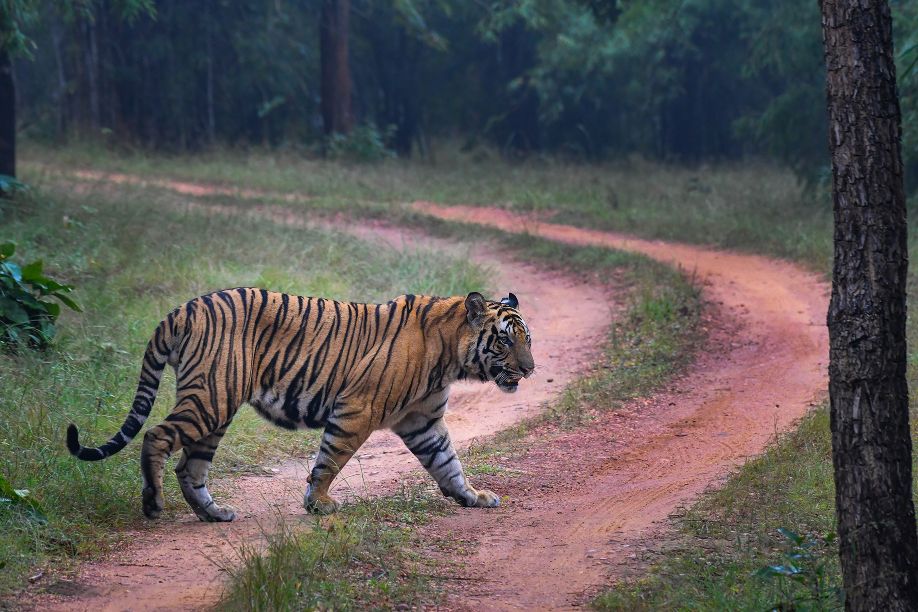
Located in Madhya Pradesh’s Vindhyan mountain range, Panna National Park is an amazing example of successful conservation and a hidden gem in India’s wildlife tourism circuit. The park is 542.67 square kilometers big and is located along the Ken River. The river cuts through deep gorges and plateaus, making a beautiful landscape with waterfalls, teak forests, and open grasslands. Panna was once very close to losing all of its tigers, but it became a Project Tiger Reserve in 1994. One of India’s most successful wildlife reintroduction programs has brought back a lot of big cats to the park, making it a symbol of hope and strength.
Panna is different from many other reserves because it has a wide range of plants and animals and not many tourists, which makes the safari experience more peaceful and personal. The park has a lot of deer and antelope species, as well as leopards, sloth bears, hyenas, Indian wolves, chinkaras, and the Royal Bengal Tiger. The Ken River runs through the park and is home to mugger crocodiles and gharials. It is also a lifeline for wildlife. Panna is also great for birdwatchers, with more than 200 species of birds, such as bar-headed geese, honey buzzards, paradise flycatchers, and many kinds of vultures. The park’s land is a mix of tropical dry deciduous forest and open woodlands, which makes it a great place for many types of plants and animals to live.

Panna is close to the famous Khajuraho temples, which makes it a great place to add to cultural and wildlife trips. The park has Jeep Safaris in its main areas, like Madla and Hinauta, and in its buffer areas, like Akola and Choubepur, where you can see more wildlife. The best time to go is between October and April, when the weather is cooler and there is more wildlife activity. The Madhya Pradesh Forest Department runs Panna, and its conservation and tourism practices show a strong commitment to eco-tourism and getting the community involved. Visitors often leave with more than just memories of the animals they saw; they also have a greater appreciation for the park’s inspiring journey from being almost extinct to becoming a thriving wildscape.Declared as a UNESCO Biosphere Reserve, Panna is surely a haven for wildlife lovers.

In Panna National Park, like in most Indian tiger reserves, tigers are identified and numbered using a standardized system based on camera trap data, pugmark analysis, and individual stripe pattern recognition—which is unique to each tiger, much like human fingerprints.
Here’s how the numbering system generally works in Panna:
Identification by Forest Department: Each tiger is first identified by the Madhya Pradesh Forest Department using camera trap images, direct sightings, and field signs (such as pugmarks, scratch marks, or scat). The tigers are then catalogued with unique stripe patterns, gender, approximate age, and the area of frequent movement.
Naming Convention: Tigers in Panna are numbered using a code that usually includes a prefix and a number:
For example, T1, T2, T3… are used to denote resident tigers in the park. These codes are often used internally and in official reports.
T1 (female), for instance, was the first relocated tigress brought to Panna during the reintroduction program after all tigers had vanished from the park in 2009. She played a key role in repopulating the reserve.
Cubs born in the wild may be tracked initially as “C1, C2” under their mother, until they reach adulthood and are assigned a formal “T” number.
Radio Collaring (for some): Some tigers, especially reintroduced individuals, are fitted with radio collars to help monitor their movement and adaptation. Their collar ID may differ slightly from their official T-number, but the forest department maintains cross-references.
Data Management: All tiger movement and sightings are logged into the All India Tiger Estimation (AITE) system and maintained at the park-level and national level via the NTCA (National Tiger Conservation Authority).
This careful and systematic monitoring has helped Panna track the success of its tiger reintroduction program, which began with zero tigers in 2009 and has since grown into a thriving and genetically diverse population.
Would you like a list of some notable tigers of Panna with brief stories about them (like T1, T2, etc.)
Panna Jeep Safari – a one-of-a-kind heart-throbbing adventure
An ultimate thrill, Panna Jeep Safari keeps the adrenaline rushing. Although spotting a tiger completes the trip for tourists but witnessing other creatures in their natural habitat is also no less amazing. Another big cat, the leopard, is another center of attraction, hunting quietly in the dark of night. Getting to spot a leopard in action is a rare sight and those who choose for night safari tend to get lucky. Other than this, tourists get to see reptiles, birds and mammals from close quarters.
Ken River Boat Safari – catch both the land and water predator in action
Apart from the two big cats, watching crocodiles in the Ken River is another major attraction for tourists. Ken River boat safari also gives a chance to spot rare vultures. It is one of the best things to do in Panna that you shouldn’t miss at any cost. Soak in the flawless natural beauty while watching every creature in action around you. Glide over the calm water and relax for a while. A dusk safari will pamper you with a stunning sunset view.
Pandav and Raneh Falls – unmissable, serene and breathtaking all at the same time
Emerging from the confluence of Khuddar and Ken rivers, the Raney Falls is one of the best waterfalls in Panna. Surrounded by crystalline granite of various shades, the waterfall presents a sight to behold. Even words can’t describe how it feels to watch Ken River cascading down the 30m deep canyon. According to the folklore, Pandav Falls is one of the stopovers of Pandavas fo Mahabharata and hence the name. Featuring natural caves, lush greenery and a lake, the fall offers a treat to the eyes. A visit to these waterfalls completes your trip to Panna.
Khajuraho Visit – listen to the stories behind the erotic sculptures
A group of Hindu and Jain temples, the Khajuraho Group of Monuments gets its name from the common date palm – khajura. After being neglected for centuries, these temples were rediscovered in the 1850s. Depicting some of the finest art in the world, the group of monuments is one of the UNESCO World Heritage Sites in India. Do plan a trip to Khajuraho to delight in a cultural extravaganza. Add to it, watching the awe-inspiring classical dance performances being performed by renowned artists across the country.
Ken River Lodge – for a forgettable country loving experience
Offering traditional royal hospitality, Ken River Lodge makes the staycation wonderful. The amazing and comfortable stay in the wild offers a unique opportunity to roar with the tigers, laze with the crocodiles and sing with the birds. An amazing Machaan restaurant overlooking the Ken River adds to its charm. 6 cottages and 6 huts sprawled in a mixed forest offer an unparalleled jungle experience.
Pashangarh – Taj Safari – sample the lifestyle of the rich
Perched atop a small hill, Pashan Garh or ‘stone fortress’ is a cluster of 12 stone cottages. Offering a sweeping view of dense forest, the hotel is also popular for its world-class hospitality. From bonnet breakfast to palanquin dining, the hotel presents an array of dining experiences.

16 days/15 nights
Delhi- Tadoba- Pench- Kanha-
Bandhavgarh- Panna- Khajuraho-Agra- Delhi.